
Opinion : Single-Use Has to Go. We’ll Adapt.
In the midst of a global waste crisis, single-use plastic bans should be the standard, not the exception.
BY JUSTINE VANDENBERG
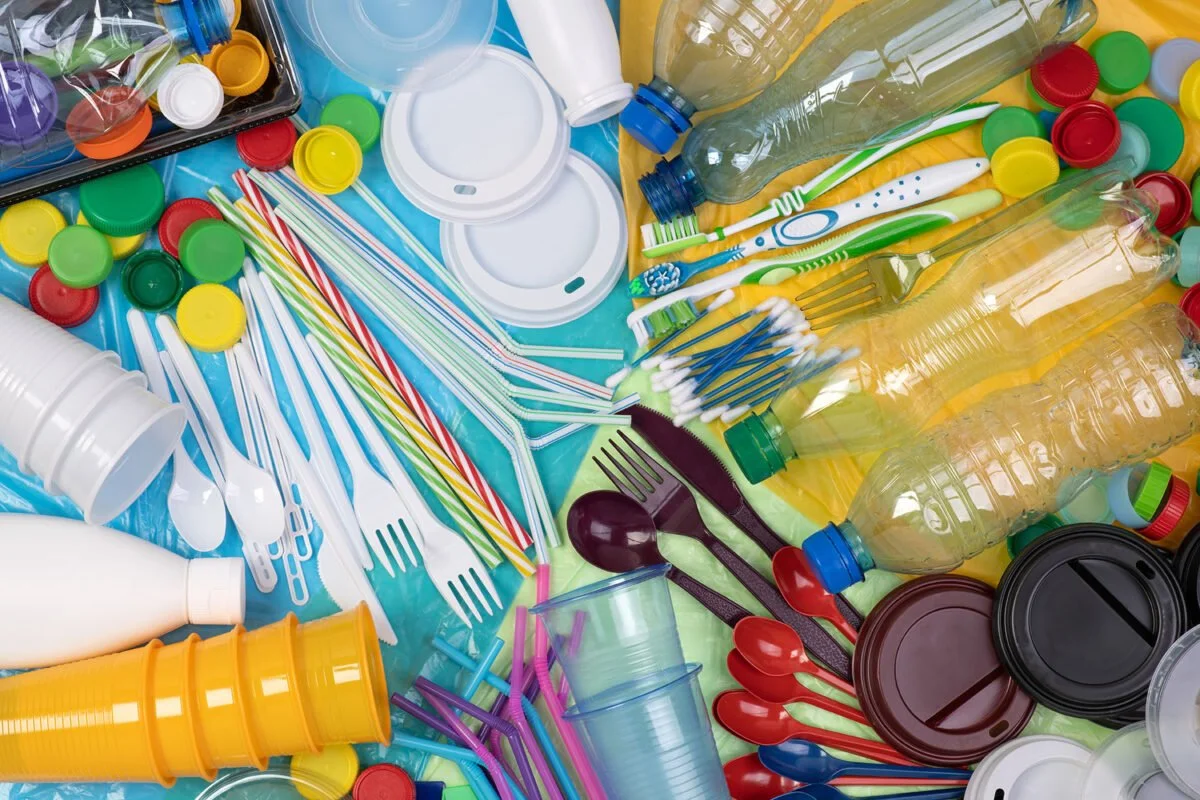
Single-use plastics have become a routine part of the average consumer’s daily experience. Image Source: Plastics Engineering
For the average American, single-use plastic has become a subconscious cornerstone of daily life. Once you start looking, you’ll quickly realize that the examples are as ubiquitous as they are automatic: the plastic bags you double-bag your groceries in, the handy disposable silverware packet you use to eat your drive-through meal on the go, the bottle of shampoo you go through about every month, the shiny food wrapper your granola bar came in, the cup with your name and daily coffee order etched in sloppy Sharpie on the outside, even the carton that you bought your organically grown blueberries in…the list goes on.
In the U.S. and across most of the globe, single-use plastics are the standard modus operandi of the 21st century—and an unnecessary luxury we simply cannot afford. As several states in the U.S. begin to demonstrate examples of successful single-use plastic bans in 2026, it’s time for the rest of the country to follow suit. Ultimately, saying “no” to single-use plastic really shouldn’t be that hard.
For the average consumer, our experiences with waste are transient. We handle a single-use food wrapper or “to-go” item for a small fraction of our time each day before making a choice to either toss it into a trash can or recycling bin. Once the product is consumed and the waste discarded, responsibility for the item tends to be absolved. Most consumers in the U.S. don’t give a second thought to the afterlife of the plastic fork we used to hastily eat a salad in the car or the flimsy cup whose utility expired as soon as we finished the caramel macchiato inside.
However, this socially conditioned blindness to the afterlife of single-use plastic is a privileged one. For example, the millions of informal waste workers who pick apart toxic e-waste in Asian markets and the marginalized communities who live next to mountainous landfills of teeming piles of trash know that the afterlife of single-use waste is very real, very toxic and very permanent.
In the contemporary age of ecological overshoot, where human societies are at risk of exceeding the planetary boundaries and capacities of the earth, the UN has identified the “triple planetary crisis” of climate change, biodiversity loss and waste pollution that will serve as the existentially defining struggles of the 21st century. Of these interconnected crises, the waste crisis looms large as a severe threat to ecosystems, natural resource quality and human health. According to the Endocrine Society, plastics in particular persist for decades within our environments, leaching toxic bisphenols, phthalates and other carcinogenic and endocrine-disrupting chemicals as they break down in soil and bodies of water or enter the air as emissions via incineration.
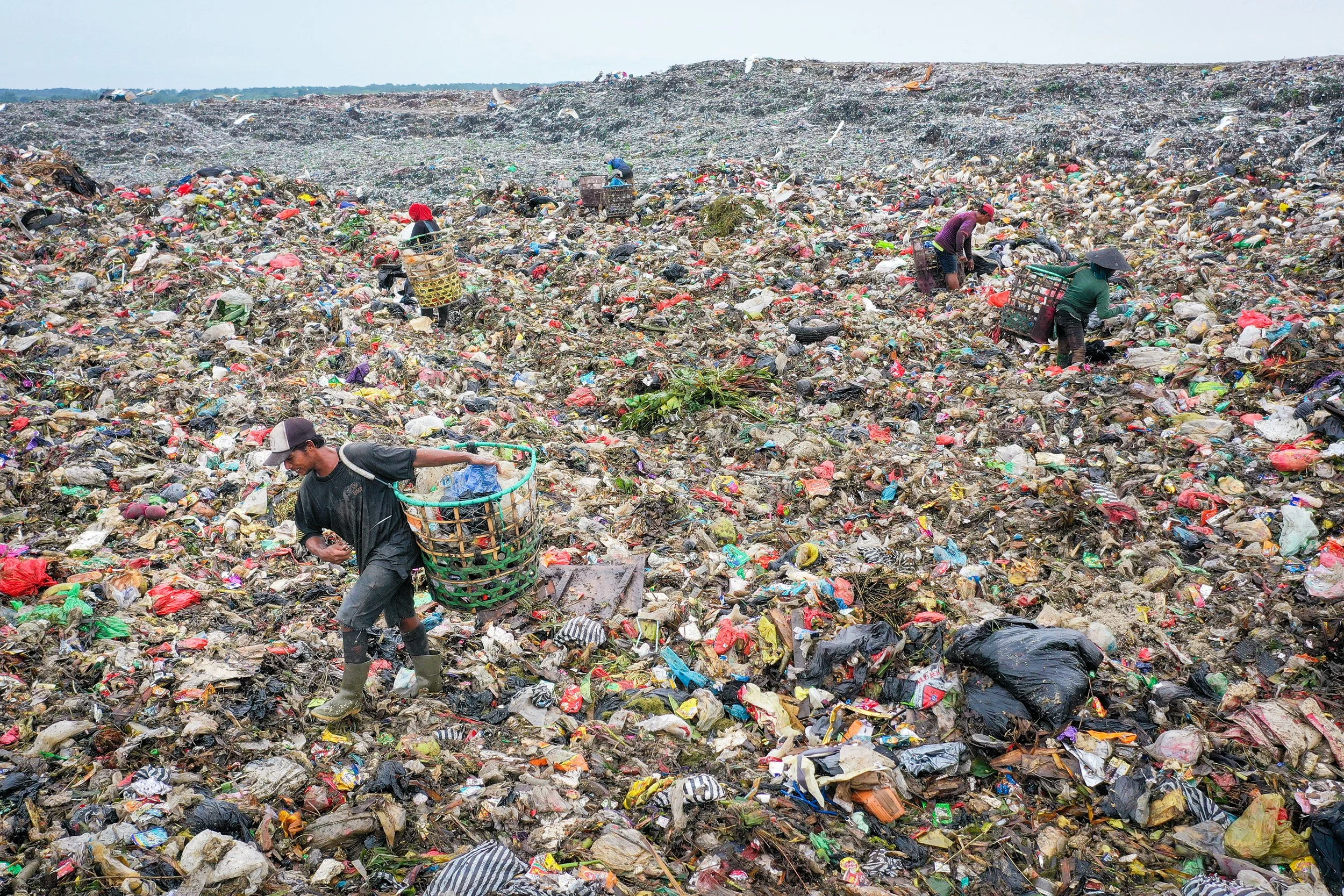
The pollution impacts of single-use plastics are both monumental and deadly. Here, a man walks through TPA Suwung, Bali’s main landfill. Image Source: Sean Gallagher, Nieman Reports, 2026
However, today’s plastic pollution crisis is not an inevitable modern tragedy of an overpopulated globe. Instead, it can be best understood as a human-engineered crisis historically contextualized by the deliberate choices and policies of corporations designed to protect an immensely profitable industry dependent upon short-lived cycles of consumerism.
The very concept of something being “disposable” is not natural but instead was socially constructed by early plastics advertising campaigns. Before plastics were introduced into American homes in the 1950s as a shining symbol of American ingenuity and effortless convenience, Americans typically practiced habits of reuse, as it was in their best interests of frugality. For example, milk delivered in glass bottles would be set back out for reuse, and even Coca-Cola modeled a successfully sustainable system of glass bottles, where customers returned bottles after use to be washed and refilled.
This proves that disposability is a relatively new concept historically. For the vast majority of human existence from the dawn of time to the 1960s, single-use plastics did not exist. If you think about it, the very notion would have been absurd. For an item to be synthesized from toxic petrochemicals after extensive levels of fossil fuel extraction only for its utility to apply just once for maybe five minutes — take the average use of a plastic fork, for example—but then take up to 1,000 years to break down, leaching toxic, cancer-causing chemicals into the environment as it does so…Not only does it sound absurd, but it also sounds borderline pathological.
If human societies could thrive without single-use plastics, they can do so again. Several states in the U.S. have acted as progressive examples of state governments waking up to realize that adding more single-use plastics to the world is a self-destructive folly that we simply can’t afford. As of Jan. 1 of 2026, SB 1053 took effect in California, allowing grocery stores to issue only recycled paper bags at checkout, strengthening a 2014 ban that served as the national model for the first plastic bag bans in the U.S.
Since then, 11 other states have followed suit to ban single-use plastic bags including Colorado, Connecticut, Delaware, Hawaii, Maine, New Jersey, New York, Oregon, Rhode Island, Vermont and Washington. Additional examples of legislation include bans of wasteful and exhaustive cycles of single-use shampoo replacement in hotels in the states of Illinois and New York.
These state-level plastic bag bans have been notably controversial, sparking opposition from the plastics industry and no shortage of complaints from consumers. The bulk of mainstream arguments against single-use plastic mostly assert that if corporations have created this crisis, why should consumers have to be inconvenienced? Single-use has become expected today because of the larger system of capitalist productivity culture we live in. People are rarely eating “in the home” anymore but instead are constantly on the go, in the car, working through lunch, etc. in very short time periods.
It is true that, generally speaking, the current structural organization of global society has made it less convenient to be sustainable. Consider a scenario where you accidentally snoozed your alarms, are running late to work for a long day of important presentations, and didn’t have time to make breakfast. You stop by a drive-thru to order a breakfast item you’ll have to eat as you drive. When you ask for a silverware packet—how else can you eat floppy scrambled eggs while driving?—they refuse, saying they don’t offer silverware amenities anymore. After becoming accustomed to an imagined “right to convenience,” most of us would probably be frustrated because we don’t have time for anything else.
While it may be true that, within the current structures and routines we have come to expect, shifts toward reusability culture may come with moments of less convenience, evolution has shown that human beings are remarkably adaptable. Developing habits of carrying a reusable set of silverware with you in your car or backpack and remembering to wash and replace them may seem like a pain, but it’s certainly achievable. And in the long run, it is much more convenient to have a long-term assembly of your own reusable items—silverware, bags, waterbottles, etc.—that you learn to incorporate into your routines than it is to create 200 million tons of toxic items each year to be used for a few fleeting moments before insidiously poisoning the entire human race across the globe for the rest of foreseeable time.
In California and Colorado, people have adapted easily, learning to always make sure they have a reusable bag handy before leaving the house. Even on the campus of DePauw University in Greencastle, Indiana, after a single-use plastic bag ban took effect in 2023 at the student Convenience store, there was some short-lived grumblings, but students soon adjusted. Now, reusability has shifted to become the expectation, and incoming students wouldn’t even know that there had ever been a habit of single-use plastic bags on campus in the first place.
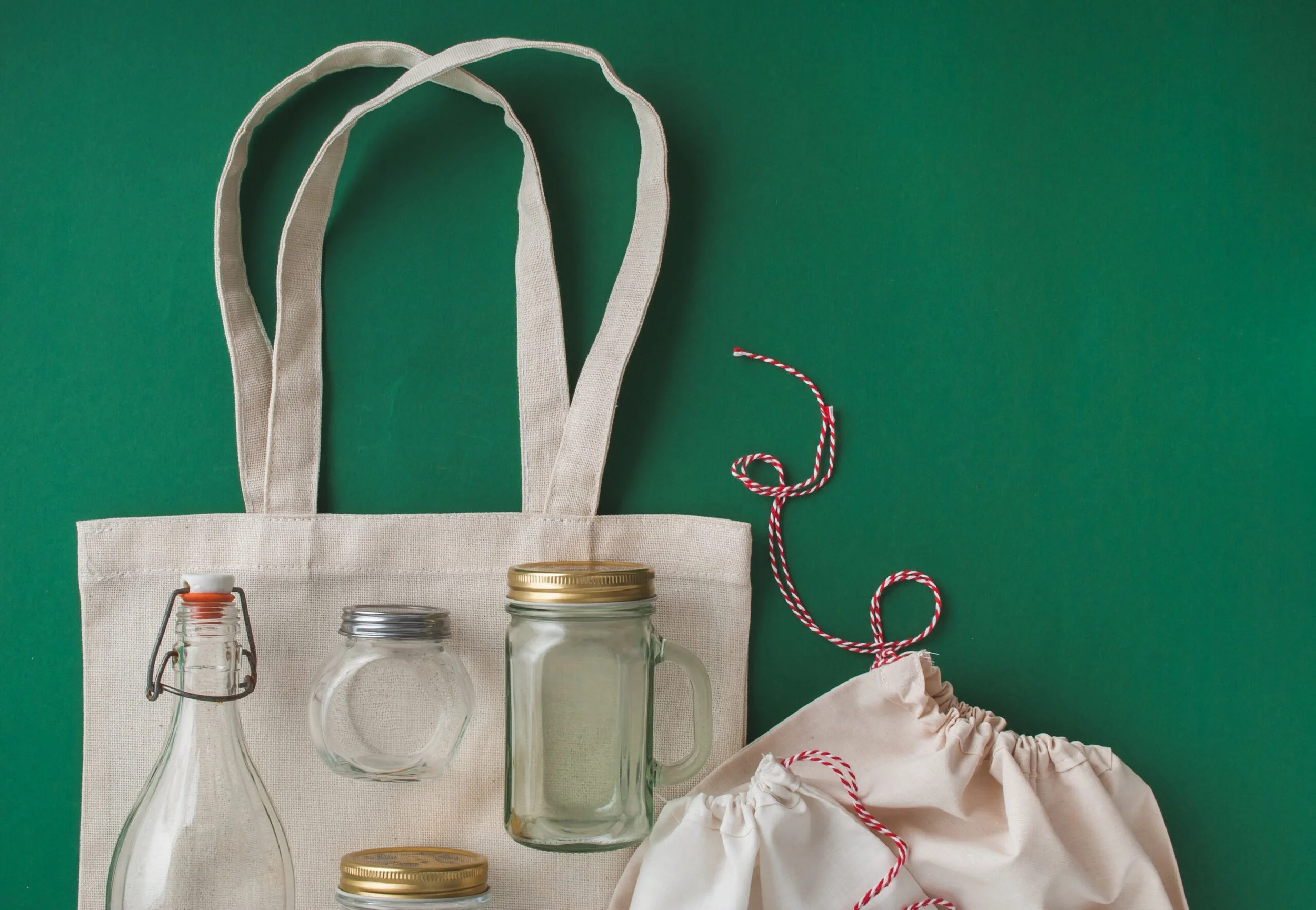
Reusability culture has defined most of human history prior to 1960. Shifting back to reusable items such as bags, waterbottles, glass, silverware, etc. is something humans have easily managed before. Image Source: Texas Disposal Systems
Yes, shifting back to cultures of reuse after being accustomed to social routines of single-use may require effort and adjustment. But at the end of the day, we’ll adapt quickly. At the risk of exacerbating a plastic pollution crisis that has already endangered the long term viability of ecosystems and human communities on Earth, banning single-use plastics as a society isn’t radical or extreme. It’s the only logical response when the cost of so-called convenience is simply too high.
State, federal, and corporate powers need to follow the examples set by recent state single-use bans, and time is of the essence. As British journalist Sabah Choudhry writes, "Single-use plastic was never inevitable. It was a business decision."
Humanity has thrived for centuries before single-use plastics. Now, in order to survive, we have to return to daily life without them.